4 upcoming voyages call at Hakata
- Autumn Seto Inland Sea Cruising & Hiroshima Cruise
Kobe → Seto Inland Sea Cruising → Hiroshima → Hakata
- Calls here
- October 29, 2026
- Day
- 4 of 4
- Autumn Jeju Island (South Korea) Cruise
Hakata → Jeju Island (South Korea) → Hakata
- Calls here
- October 29, 2026
- Day
- 1 of 4
Calls here again on November 1, 2026 (day 4).
- Autumn Shingu Cruise
Hakata → Shingu → Yokohama
- Calls here
- November 1, 2026
- Day
- 1 of 4
- Winter Shingu Cruise
Hakata → Shingu → Yokohama
- Calls here
- February 5, 2027
- Day
- 1 of 4
Times shown are as scheduled and can change. Weather, sea conditions and port operations may shorten a call or prevent it — always check the latest information from NYK Cruises, and once aboard, from the ship.
About Hakata
Hakata is the port of Fukuoka, and for most ASUKA III voyages it is where the cruise begins or ends rather than a day spent ashore. Ships berth at Chuo Wharf, close enough to the middle of the city that the shuttle into the centre takes about twenty minutes. Almost every call here is an embarkation that sails at five in the afternoon, or a disembarkation first thing in the morning. So the useful question is not what to do with a day in port, but what to do with the evening before you sail, or with the day after you step off.
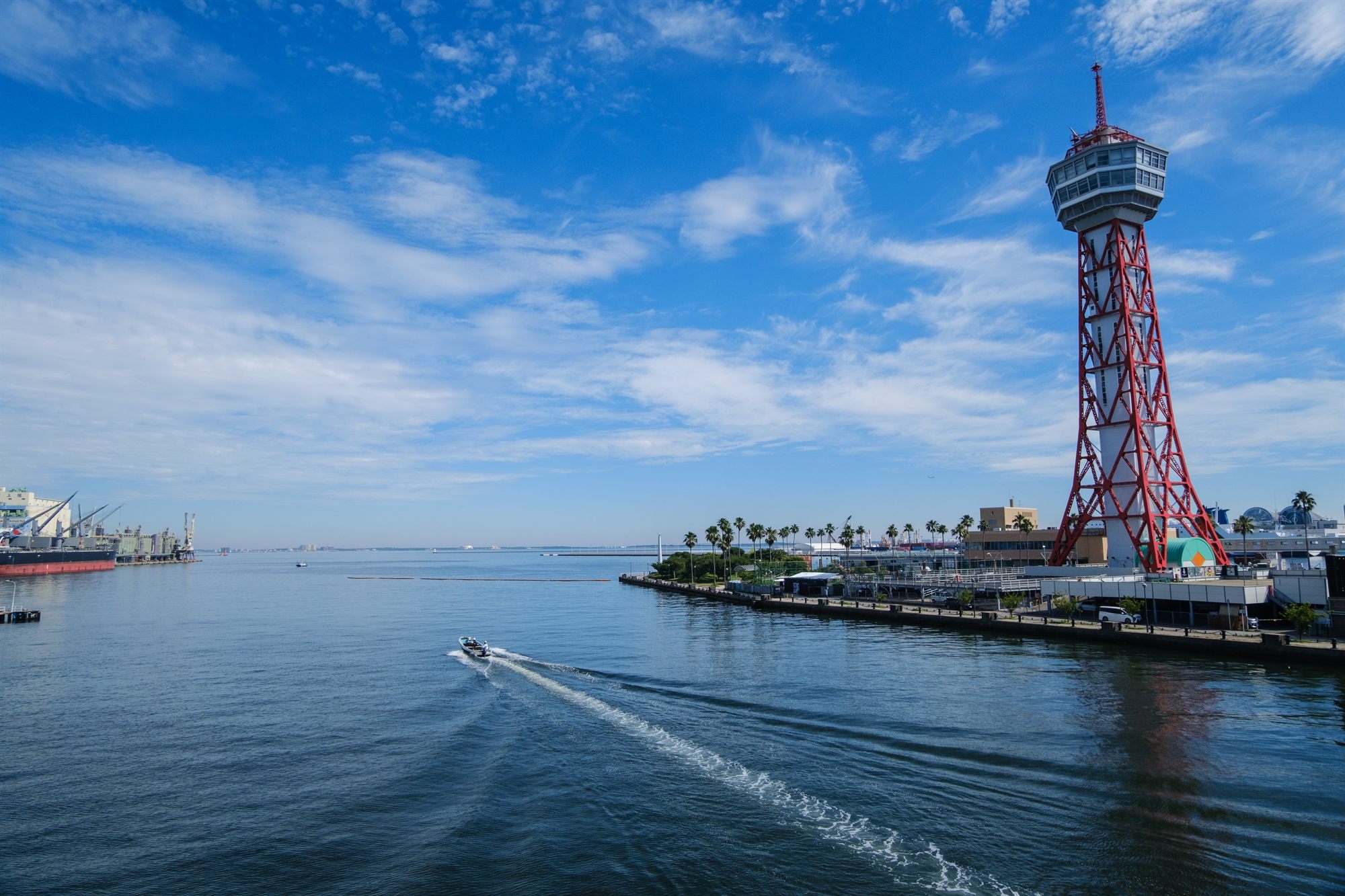
Within reach of the port
Getting between the ship and the city
A shuttle runs between the ship and central Fukuoka on every call, with no charge and no reservation. Where it drops you varies — the city hall in Tenjin on a day call, near JR Hakata Station after disembarkation — and the times are announced on board. Worth knowing before you arrive: Fukuoka Airport is two subway stops from Hakata Station, which is why a cruise that starts or ends here is easier to reach than the port cities further down the coast.
Dazaifu Tenmangu
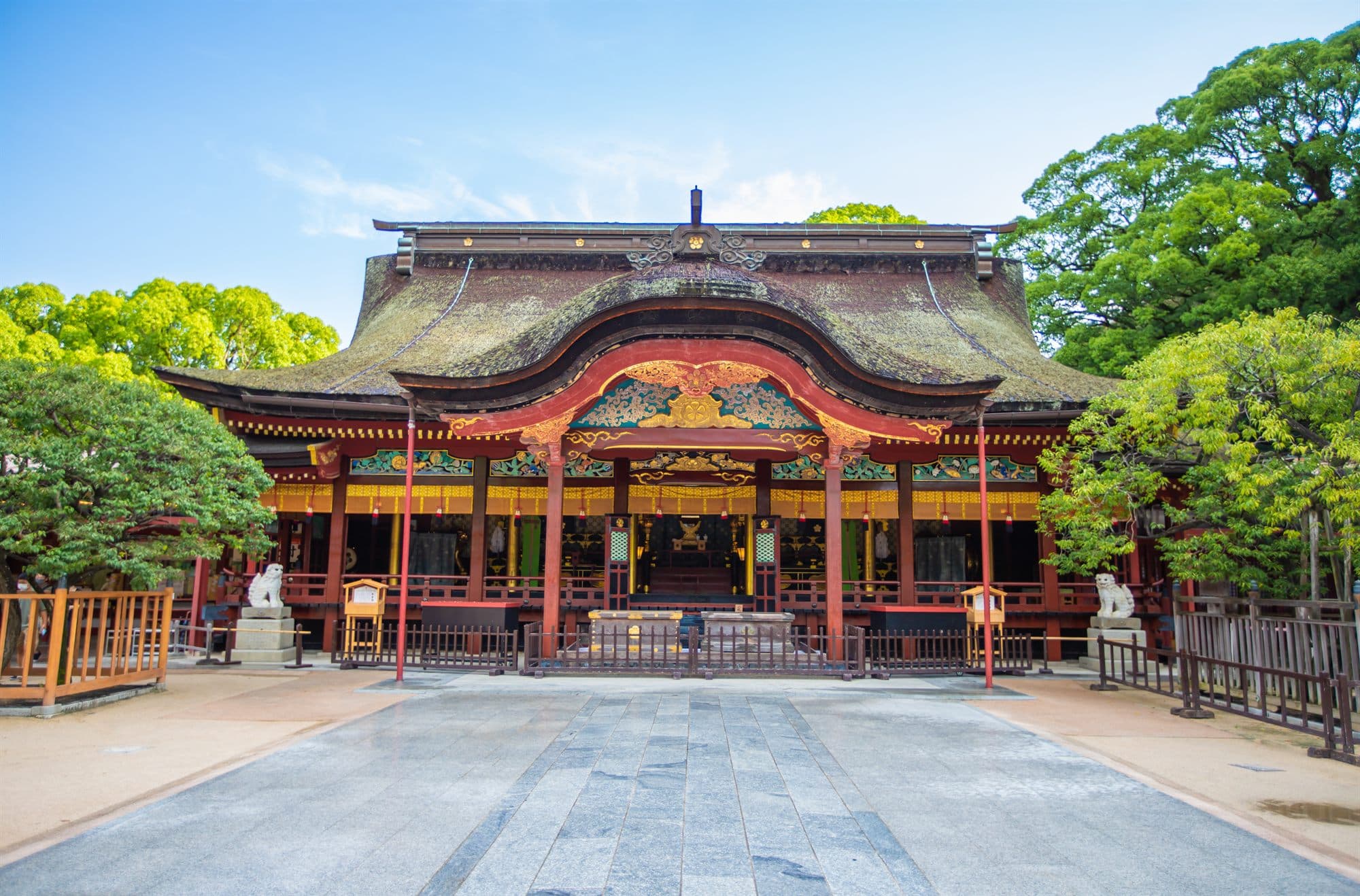
Half an hour inland. The shrine stands over the grave of Sugawara no Michizane and is the head of some twelve thousand Tenjin shrines across Japan, visited for learning and for warding off misfortune. Three bridges cross the pond on the approach, read as the past, the present and the future. Building work has been going on around the main hall, so it is worth checking their site before you plan a visit around seeing it.
Kushida Shrine and the Hakata Gion Yamakasa
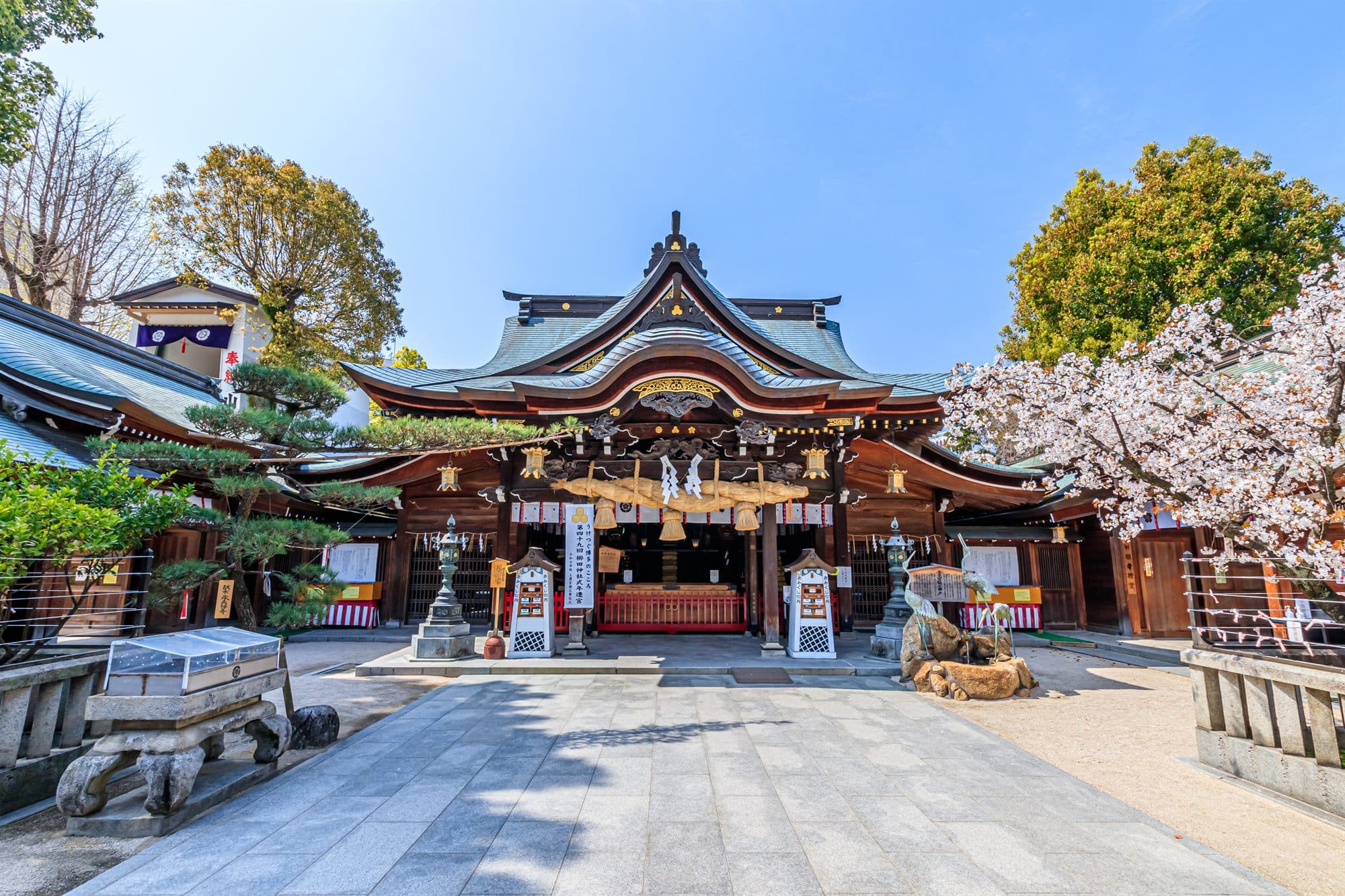
The shrine at the centre of Hakata's festival, a short ride from the berth in the old merchant quarter. The Yamakasa is UNESCO-listed and runs in the first half of July, when tall decorated floats stand at points around the city and teams race one-tonne floats through the streets at dawn. A decorated float stands at the shrine outside the festival too, which is the only way most visitors will see one.
Hakata Gion Yamakasa (official) ↗in Japanese — your browser can translate it
Nakasu and the yatai
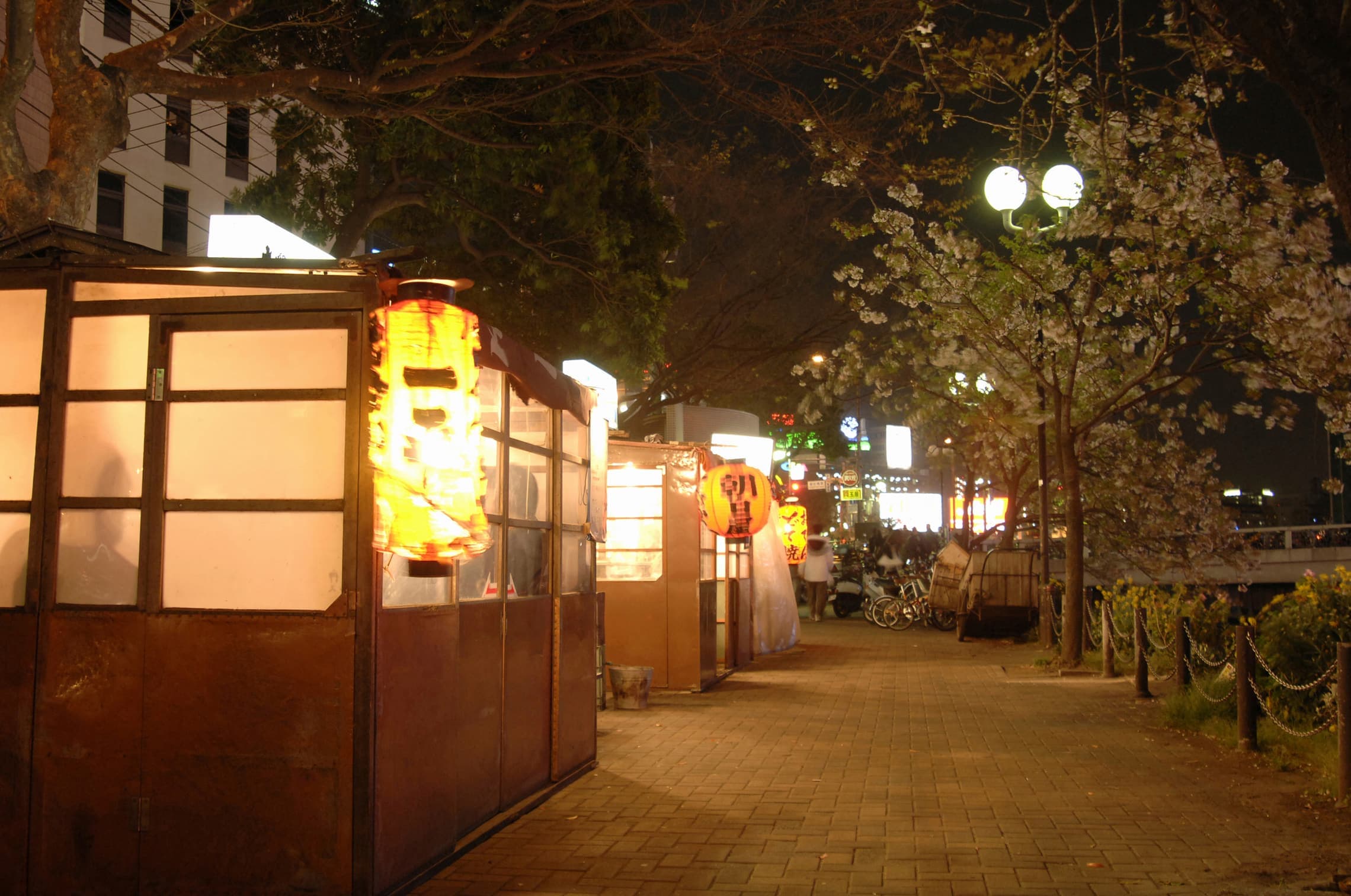
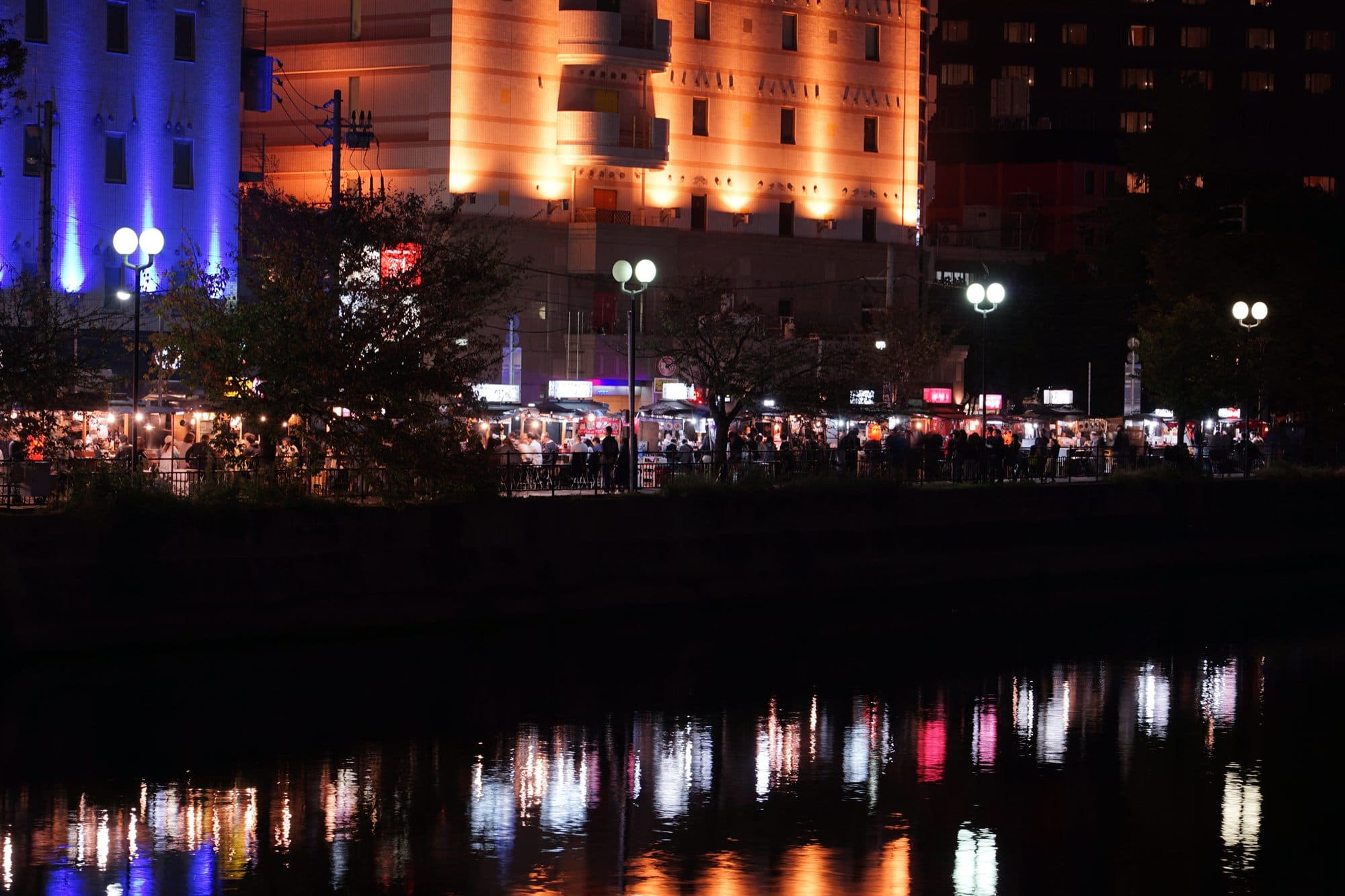
Fukuoka licenses its yatai, and they open in the evening along the Naka River at Nakasu and around Tenjin. Ramen, grilled skewers, a counter for perhaps eight people. This is the obvious answer to an evening before an embarkation, and the reason to arrive in Fukuoka the day before rather than the morning of.
Itoshima
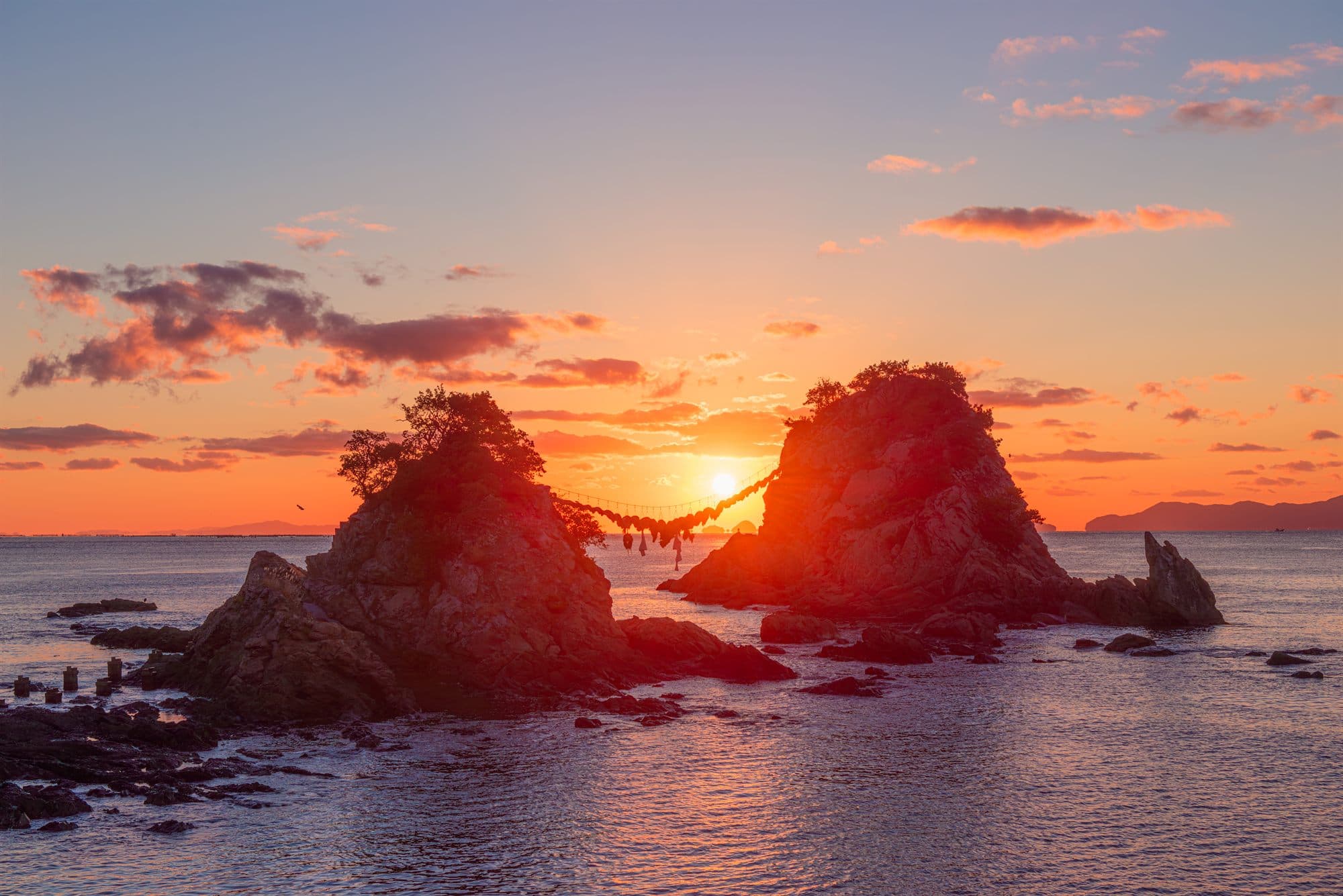
The one nobody expects. West of the city the coast turns to open sea, and at Sakurai Futamigaura a pair of rocks joined by a rope stand in the water below a white torii. Sakurai Shrine is just inland. It is a drive rather than a train ride, so it suits a chartered car better than a day of working out buses.
Shore excursions
NYK Cruises run their own guided excursions at each port, booked by guests themselves through My ASUKA PLANS — the booking window opens before departure and depends on your cabin class. They are conducted in Japanese. Going ashore independently is always an option.
Official sources
- Fukuoka official travel guide (English) ↗
- Fukuoka Convention & Visitors Bureau — よかなび ↗in Japanese — your browser can translate it
- Hakata Port International Terminal ↗